Post-Gazette Blogs

Searching for session beers

Let’s be clear about one thing right off the top — I’m definitely a big fan of big beer.

But I love little beer too, especially since more breweries are putting an emphasis on making their lower-alcohol offerings as flavorful as possible. It’s a big enough deal that the trend has its own name — session beer, or beers that have low alcohol by volume without sacrificing flavor.

Why do session beers work? There are plenty of instances when cutting back on the amount of alcohol you’re consuming is a good idea, and if beer drinkers can accomplish that without losing the character and flavor that makes craft beer enjoyable, everyone comes out on top.

Just a few years ago, it would have been a little tough to track down a solid, locally produced session beer. That’s not the case today, though; I found two great options at Rock Bottom in Homestead, where brewmaster Brandon McCarthy — that’s him in the photo above — was happy to discuss how session beers gives his customers a chance to sample new flavors and styles without worrying about getting too sloppy during an afternoon shopping trip at the Waterfront.

Session beers have been at the forefront of Scott Smith’s mind pretty much since he opened East End Brewing; after some experimenting, he came up with a nut brown ale recipe that suited its namesake: Fat Gary. Mr. Smith has even established a session beer series of seasonals and one-offs, all with ABVs below 5 percent.

And as patrons of Piper’s Pub can attest, there are always several sessionable options available, a boon to those who are watching a Premier League football match or two.

That’s not even close to all of the options that are available, whether they’re locally produced or showing up at local distributors. So the next time you’re out for dinner, ask about what session beers are available. You’ll be pleasantly surprised at what you’re missing. And what you’re not.

Post-Gazette coverage of session beer:
Doing deli — sort of — on Carson Street


shadow cap

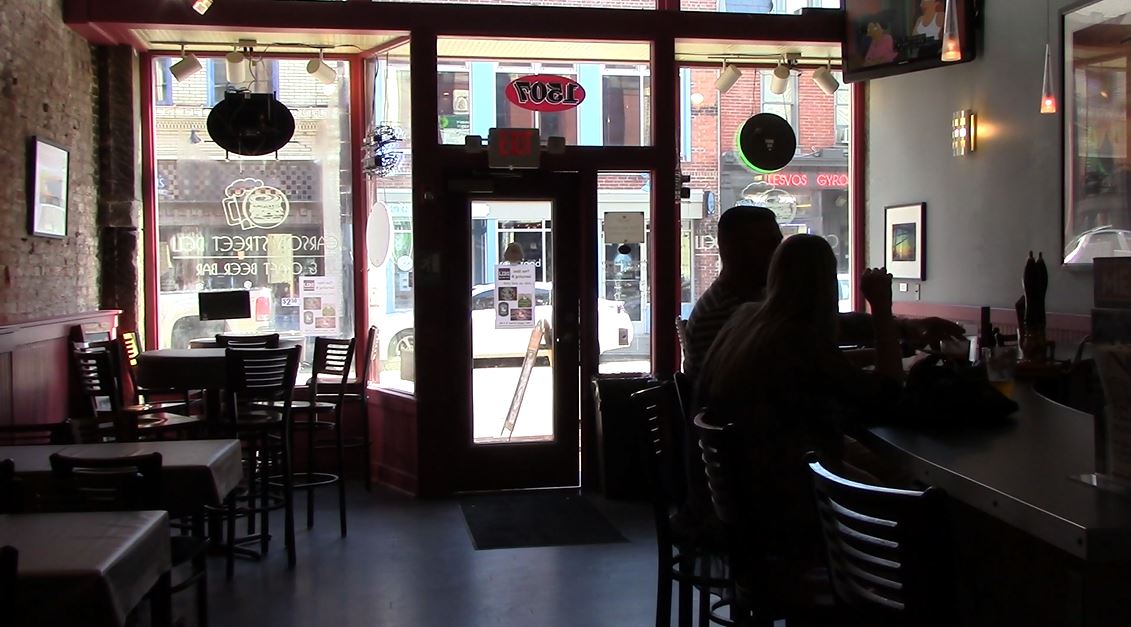
It can be a little tough to pin down Michael Murphy on the “deli” part of his business.

The “craft beer” part, however, is as straightforward as they come.

Mr. Murphy, the owner of Carson Street Deli and Craft Beer Bar, will quibble about whether the food he serves qualifies as delicatessen fare, and that’s understandable. Just look at the unconventional Carson Street Reuben; in spite of the familiar name, this deli’s version comes with tart slaw instead of sauerkraut and it’s not grilled, to better emphasize the Breadworks marbled rye.

But Mr. Murphy isn’t bashful about discussion the relationships he’s built with the region’s brewers; they’re a big reason why its not unusual to find beers at the deli that aren’t available anywhere else. And many of those custom-brewed beers find their way to the deli on Wednesday nights, when Mr. Murphy has held regular tasting sessions, pretty much since he took ownership of the deli five years ago.

Each Wednesday night might focus on a specific brewery — the week I visited it was Brooklyn Brewery — or on several examples of a common style. Whichever the case, Murphy — and his enthusiastic curiosity about all things craft beer — will be just as excited to get a taste as any of his regulars.

And if you get an unconventional deli sandwich to go alongside, all the better.

Category: Allegheny County | Tags:

Down on the Hop Farm

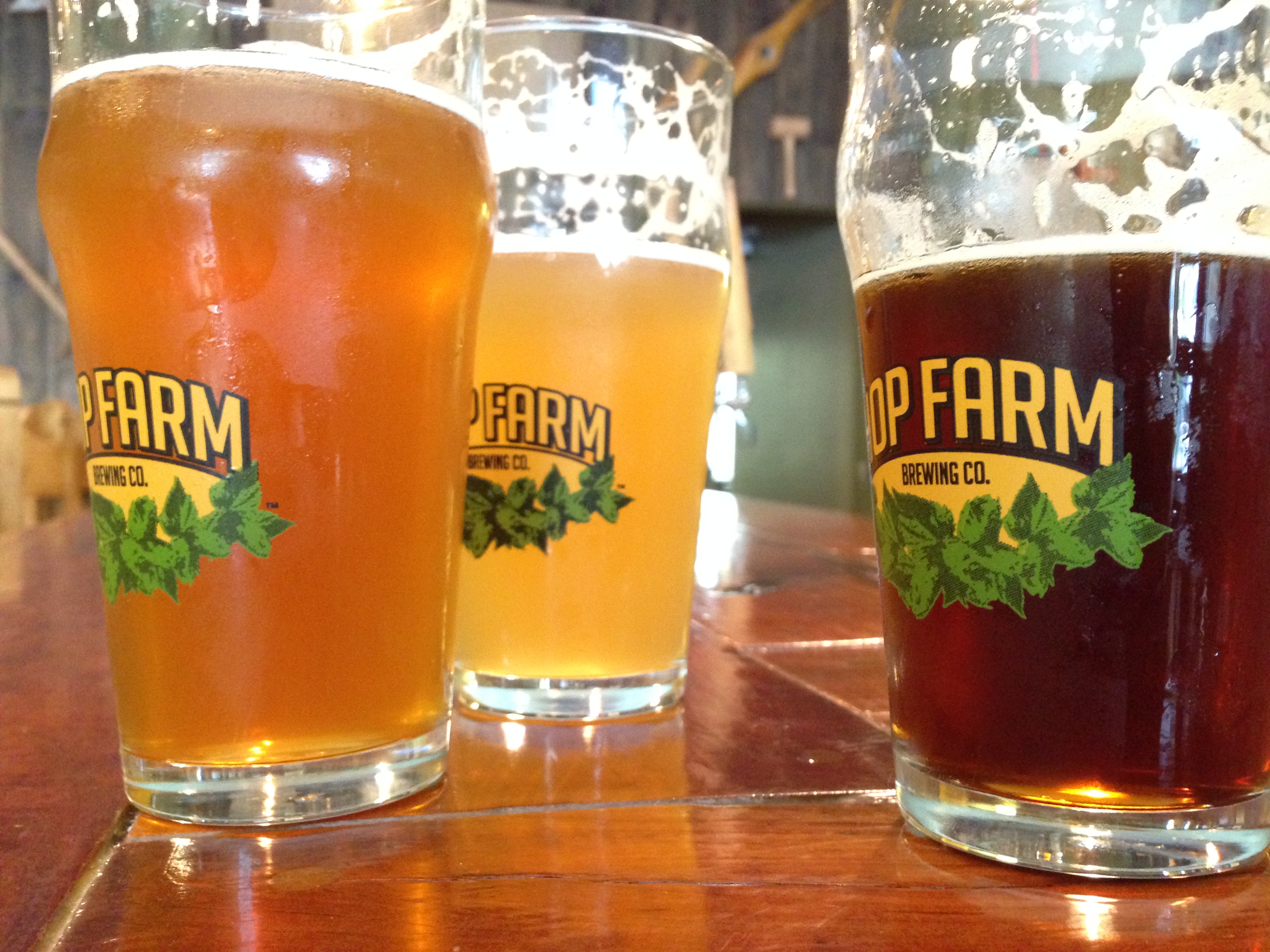
IMG_2425

At almost two years old, Hop Farm Brewing has a growing problem.

Owner Matt Gouwens isn’t having any problems growing ingredients for the beer he brews at 56th and Butler streets in Lawrenceville; the day we visited, he was dumping home-grown lime basil into a tank of saison that will be ready to drink in a few short weeks.

Instead, the issue was the tanks themselves — as in, Mr. Gouwens didn’t have enough of them. That was partially corrected earlier this year, when gleaming new tanks came on line, more than doubling the brewery’s storage capacity. There could be more on the way soon, if the plan — more capacity and an expansion of the brewery’s in-house tap system to include as many as 15 lines, including one that will be dedicated to barrel-aged beers — comes to fruition.

In the meantime, Mr. Gouwens will continue to churn out a full line of staples and inventive seasonals and one-offs. In the tanks this week is the aforementioned — and as yet unnamed — lime basil saison; while we talked this week, he mentioned that his first-ever hefeweizen would be replaced this fall by a dunkelweizen … or maybe even a pumpkin dunkelweizen. Those go well with the raspberry-tinged Copperhop IPA the brewery made earlier this year and a growing sours program (Remember 2014’s sour blonde Margot? A barrel-aged version will be available soon).

And if the beer isn’t enough to get you to the brewery there are a handful of events coming up in the next month or two that should. The Lawrenceville Rock All Night Tour on Aug. 15 will bring bands, beers and several food trucks to 56th Street outside the brewery. The Aug. 30 King of the Wing event is sold out, although Mr. Gouwens said a few tickets could be released later this month. And tickets for the big one — the brewery’s 2nd anniversary party Sept. 25, which will feature more than two dozen food-and-beer pairings — will go on sale towards the end of this month. And that sounds like an excellent anniversary to me.

Category: Pittsburgh | Tags: ,

Piper’s Pub: It’s where the firkins live

Posted

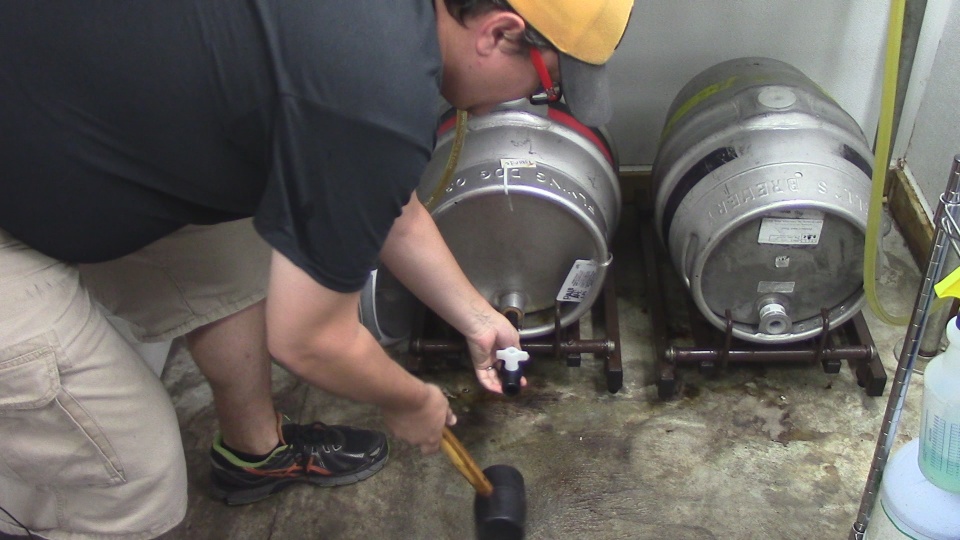
hart tapping

It has a rough, cobbled-together look that seems appropriate for a Carson Street basement.

But don’t overlook the cask ale system that feeds the four hand pumps behind the bar at Piper’s Pub. It’s responsible for what is often the best-tasting beer in the city.

The original iteration of the system was installed in 2008, as owner Drew Topping sought more authenticity for his South Side Scottish pub. It’s grown to be able to handle as many as four casks now, and those lines are almost always spoken for, as the cask program, run by cellarman Hart Johnson, continues to flourish.

So what is cask ale? That’s a broad term to describe beer that’s been conditioned in the same vessel from which it’s served. That gives the beer a different kind of carbonation; instead of the fizzy mouthfeel we’re accustomed to, we get a creamy, velvety texture in its place. The most common container is a firkin, a keg that holds just shy of 11 gallons.

Also, cask ale is traditionally stored and served at cellar temperatures, somewhere between 45 and 50 degrees, so the taste of the beer isn’t masked by freezing cold. Are the beer’s malts sweet or bready? Do you taste citrus from the hops or do they lean toward a resinous, pine profile? It’s all right there, pretty much as close to the brewer’s intention as we can get.

Piper’s, at 1828 E. Carson St., doesn’t serve the only cask beer in town, but I don’t know of any place that does it with such care. And for that reputation, they often get casks that no one else can get their hands on. It’s a different beer experience, sure, but it’s worth a trip to Piper’s to give it a try.

Post-Gazette coverage of Piper’s Pub:

Category: Allegheny County | Tags: ,

Keeping cool at Penn

Posted

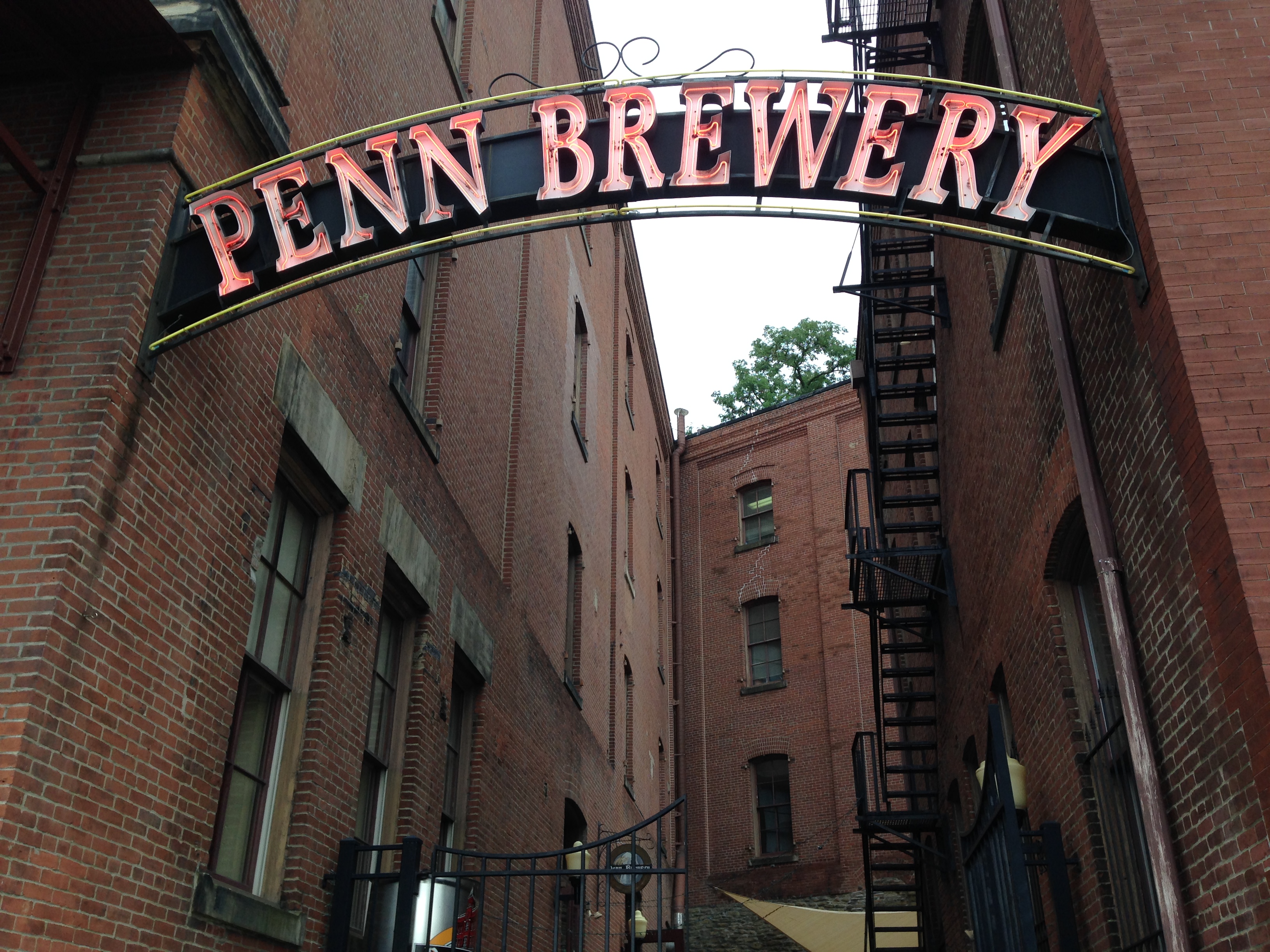
IMG_1960

Even walking just the few blocks from the bus stop to 800 Vinial St. on a sticky afternoon was enough a little sweaty … and more than a little thirsty.

And that’s OK. Inside that address — that’s the home of Penn Brewery — are more than a dozen ways to keep cool on a humid summer afternoon.

Since it was founded 29 years ago by the late Tom Pastorius, Penn has stood for one thing — German beers. The brewery has made its living brewing German styles, mostly the bright, clean — and don’t forget cold — lagers that country’s brewers are famous for.

Let’s make sure something is clear — our ubiquitous pale American lagers technically are related to what goes on at Penn, in that the giants brew alcoholic beverages that are of the same broad style, but that’s about where the similarities end. Those beers strive to be inoffensive. These beers? They strive to be crisp and a bit spicy (Penn’s Kaiser Pils), balanced with hints of dark bread (Penn Dark dunkel) or rich and roasted dancing with caramel sweetness and a little extra booze (Penn’s St. Nikolas Bock). Even the non-lager in the brewery’s year-round lineup — the sunshine-colored (and flavored) Penn Weizen — is a perfect representation of the southern German style.

Lagers are fermented at colder temperatures, because that’s the best way to keep lager yeast strains happy. And they have to sit in that cold for at least a month — as opposed to ales that can be ready to drink in a few days — while they settle. Maybe it’s that extra time in the cold, but summer has always seemed like the right time for me to track down Penn’s German beers. Go find a bottle of Penn’s Kaiser Pils and you’ll see what I mean.

Post-Gazette coverage of Penn Brewery: